
Simple Christian Traditions for Christmas That Keep Jesus at the Center
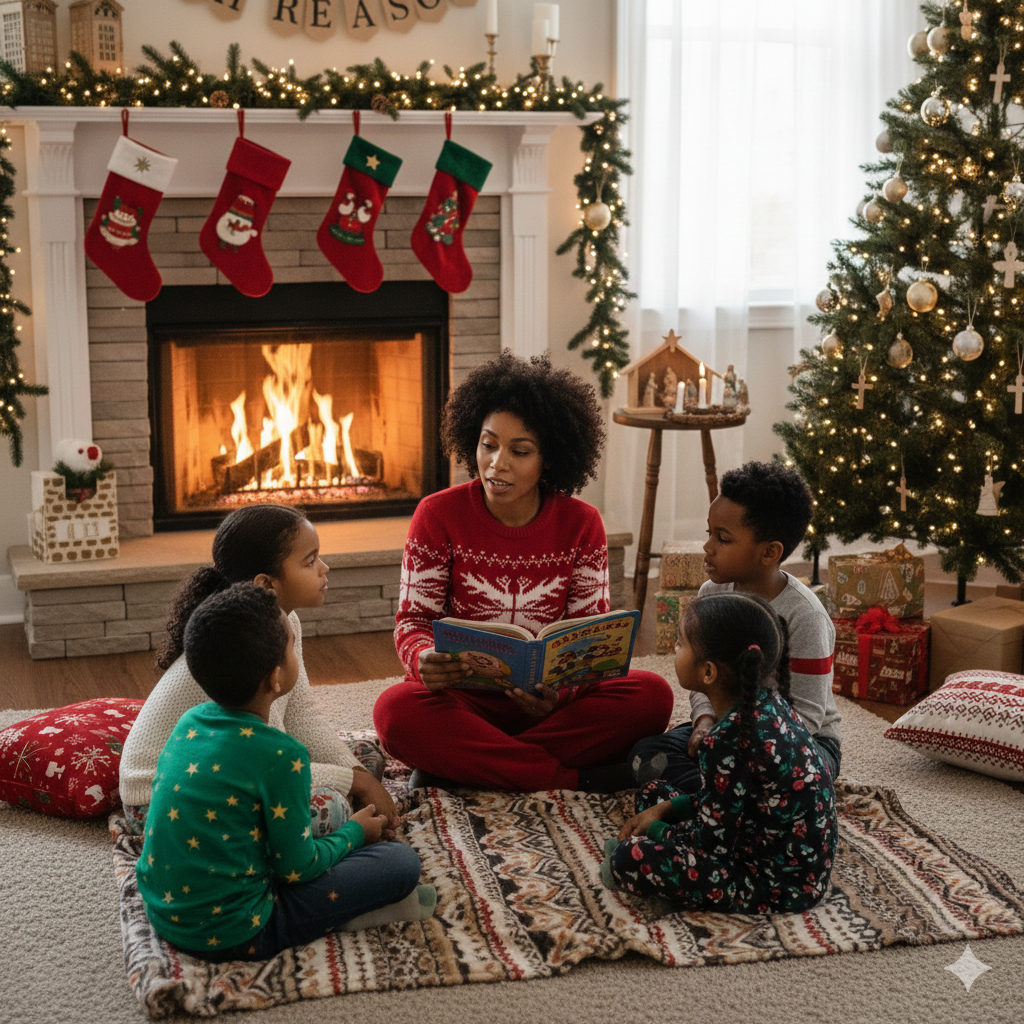
Let's be honest, Mama—Christmas can feel overwhelming. Between the Pinterest-perfect decorations, elaborate elf shenanigans, cookie exchanges, school parties, gift buying, and family gatherings, it's easy to reach December 26th exhausted and wondering if anyone actually remembered whose birthday we were celebrating.
You want your children to love Christmas, but more than that, you want them to love Jesus. You want to create meaningful traditions that point their hearts to the Savior, but you're already drowning in to-do lists and holiday obligations. You don't need another thing that makes you feel inadequate or another elaborate tradition you can't sustain.
What if I told you that the most powerful Christmas traditions aren't the ones that require the most effort? What if keeping Christ at the center of Christmas could actually be simple, sustainable, and deeply meaningful for your family?
Today, let's explore simple Christian traditions that will help your family celebrate the reason for the season without adding to your holiday stress. These are doable, adaptable, and designed for real families with messy schedules and limited bandwidth.
Why Christian Traditions Matter for Your Family
In a world where Christmas starts in October at retail stores and Santa gets more airtime than the Savior, intentional Christian traditions become spiritual anchor points for your family.
Think about your own childhood. What do you remember most? Probably not the expensive gifts or perfect decorations. You remember the feelings, the moments, the traditions that made your family unique. Maybe it was Christmas Eve candlelight service, reading the nativity story in pajamas, or singing "Happy Birthday" to Jesus over cake. These memories shaped your faith story.
The same is true for your children. The traditions you create now become the faith foundation they'll carry into adulthood. When they're grown and establishing their own families, they'll reach back for what felt meaningful in their childhood home. They'll remember how their family celebrated Jesus, not just Christmas.
But here's what matters most: traditions don't have to be elaborate to be meaningful. In fact, the simplest traditions often have the greatest impact because they're sustainable. You can actually do them year after year without burning out. Consistency beats complexity every single time.
Your family's Christmas traditions don't need to look like anyone else's. They just need to work for YOUR family, point YOUR children to Jesus, and create space for YOUR household to worship during this sacred season.
Starting meaningful traditions begins with intentional prayer. Before you implement any tradition, pray about what would genuinely bless your family and honor God. Ask Him to show you what traditions would best serve your unique household. The Glory Prayer Box is perfect for this season—dedicate a section to your family's Christmas prayers, hopes, and gratitude throughout December. Track how God moves in your home during this special season. Start your Christ-centered Christmas with the Glory Prayer Box.
Advent: Counting Down with Intention
Advent is one of the most beautiful Christian traditions, yet many families miss it entirely because they don't understand what it is or think it's too complicated.
Advent simply means "coming" or "arrival." It's the four-week period before Christmas when we prepare our hearts for Jesus's arrival. While the world counts down to presents and parties, Christians count down to the celebration of God becoming flesh and dwelling among us.
Simple Advent Calendar Ideas:
You don't need an expensive wooden calendar with tiny drawers. Create your own by writing Scripture verses on slips of paper, rolling them up, and placing them in a decorative bowl. Each day, let a different child pick one and read it aloud. Focus on prophecies about Jesus's coming and the nativity story passages.
Or try a reverse Advent calendar: each day, add an item to a box that you'll donate to a local charity on Christmas Eve. Your children learn that Advent is about preparing to give, not just preparing to receive.
Advent Candles at Dinner:
If your family eats dinner together, even just a few nights a week, light Advent candles. You don't need a fancy wreath—four purple candles and one white candle will do. Each week, light one more candle and read a short Scripture passage about hope, peace, joy, and love. On Christmas, light the white Christ candle.
This five-minute practice transforms ordinary dinnertime into sacred space. Your children will remember the soft glow of candlelight and the anticipation building each week.
Family Advent Devotions:
Keep it simple: read one chapter from the Jesus Storybook Bible or a short Advent devotional each evening. Even five minutes counts. Consistency matters more than length. Let kids take turns reading, ask questions, and pray together.
The goal of Advent isn't to add stress—it's to add intentionality. Choose one Advent practice that fits your family's rhythm and do it faithfully. That's enough.
The Nativity Story: Making It Come Alive
The Christmas story is the greatest story ever told, but familiarity can breed passive listening. Our children need to experience the nativity, not just hear it.
Read It Repeatedly:
Throughout December, read the Christmas story from different Gospel accounts. Read it from children's Bibles, adult Bibles, and illustrated storybooks. Repetition helps children internalize truth. By Christmas Day, your kids should be able to tell you the story themselves.
Make it interactive. Ask questions: "Why did Mary and Joseph have to travel to Bethlehem?" "How do you think Mary felt when the angel appeared?" "What do you think the shepherds thought when they saw angels?" Help children enter the story emotionally.
Act It Out:
Kids learn through play. Let them act out the nativity story with costumes from the dress-up box. Bathrobes become shepherd garments. Crowns become wise men's headpieces. A doll becomes baby Jesus. Don't worry about historical accuracy—focus on helping them engage the story physically.
Pray Through the Nativity:
As you read and reenact the Christmas story, turn it into prayer. Thank God for sending Jesus. Pray for people who feel like outsiders (like the shepherds). Ask God to help you seek Jesus like the wise men did. The Glory Prayer Box helps your family organize these prayers—write down nativity-inspired prayers and watch your children's faith grow as they see God answer. Order yours today

Service and Giving Traditions
Christmas is about God's ultimate gift to us. Teaching our children to give reflects the heart of the Gospel.
Adopt a Family:
Many churches and organizations facilitate adopting families in need during Christmas. Let your children help pick out gifts for kids their age. Talk about how Jesus came for everyone, especially those the world overlooks. This shifts focus from "what am I getting?" to "how can we bless others?"
Angel Tree Ministry:
Prison Fellowship's Angel Tree program provides Christmas gifts to children of incarcerated parents. Participating teaches children about Jesus's heart for the marginalized and imprisoned. It's a tangible way to live out Matthew 25:36.
Serve Together:
Volunteer as a family at a soup kitchen, food bank, or shelter. Young children can hand out rolls or set tables. Older kids can serve food or sort donations. Experiencing others' needs firsthand cultivates gratitude and compassion.
Random Acts of Christmas Kindness:
Create a December kindness calendar. Each day includes one simple act: leave cookies for your mail carrier, pay for someone's coffee, write encouragement notes to teachers, shovel a neighbor's driveway, donate toys. Let kids help plan and execute these acts of love.
The Gift of Giving:
Before opening presents on Christmas morning, have each family member choose one of their gifts to donate to a child in need. This is countercultural and might meet resistance at first, but it teaches profound truth: we give because we've been given to. We love because He first loved us.
These service traditions demonstrate that Christianity isn't just about what we believe—it's about how we live and love.
Simple Daily Traditions That Stick
The most powerful traditions are often the smallest ones done consistently.
Christmas Music with a Message:
Fill your home with worship music throughout December. Not just fun Christmas songs (though those have their place), but hymns and worship songs that tell the Jesus story. "O Holy Night," "What Child Is This," "Joy to the World"—these are theology set to music.
Play them during breakfast, in the car, while decorating. Your children will absorb truth through song. Years from now, these melodies will trigger memories of your home worshiping together.
Bedtime Christmas Devotions:
Add five minutes to bedtime routine for a Christmas devotional. Tuck kids in, read one page about Jesus's birth, pray together. These quiet moments before sleep create sacred space that children will cherish.
Jesus's Birthday Cake:
On Christmas morning, before presents, sing "Happy Birthday" to Jesus over a birthday cake. Light candles. Celebrate that Christmas is ultimately about HIS arrival, not our gifts. This simple act recenters the entire day.
December Gratitude Jar:
Place a jar and slips of paper on your table. Throughout December, family members write things they're grateful for and place them in the jar. On Christmas Eve, read them aloud together. Gratitude shifts our focus from what we want to what we already have.
Christmas Card Prayers:
As Christmas cards arrive, pray for each family. Display cards on a wall or ribbon, and during dinner or bedtime, pick one card and pray for that family by name. This transforms junk mail into ministry and teaches children to pray for community.
Making Prayer Your Foundation:
All these traditions mean more when rooted in prayer. Use the Glory Prayer Box to organize your family's Christmas prayers. Create categories: prayers for others, gratitude for Jesus, requests for the season, praises for God's faithfulness. Let children write prayers and check back to see how God answers. Transform your family's Christmas with intentional prayer—get your Glory Prayer Box now and receive a FREE faith tee as our gift to you!
Creating Your Family's Unique Traditions
Here's your permission slip, Mama: you don't have to do everything in this article.
Read through these ideas and pick two or three that resonate with YOUR family's personality, schedule, and spiritual goals. Maybe you're drawn to Advent candles and service projects. Maybe acting out the nativity and Jesus's birthday cake feel right. Maybe something completely different sparks your imagination.
The best traditions are the ones you'll actually do—not the ones that sound impressive but add stress.
Consider your family's unique rhythm. If you're not morning people, don't commit to elaborate breakfast devotions. If your kids are young and bedtime is chaos, don't add complicated evening rituals. Work WITH your family's natural flow, not against it.
Also, traditions can evolve. What works when your kids are toddlers might need adjustment when they're teenagers. Stay flexible. The goal isn't rigid adherence to tradition—it's consistently pointing your family to Jesus in ways that fit your season of life.
Start small this year. Pick one or two new traditions. Do them imperfectly. Adjust as needed. Next year, they'll feel more natural, and you might add another. Over time, you'll build a collection of meaningful practices that define your family's Christmas celebration.
Remember: your family's traditions don't need to look like anyone else's. God gave you YOUR specific children, YOUR unique personalities, YOUR particular circumstances. Honor that. Create traditions that serve YOUR family's discipleship journey.
Conclusion
As this Christmas season approaches, you have a choice. You can get swept up in the cultural current of commercialism, busyness, and stress. Or you can intentionally create space for your family to celebrate Jesus—simply, meaningfully, sustainably.
These simple Christian traditions aren't about adding to your to-do list. They're about protecting what matters most: your family's hearts, your children's faith formation, and your household's worship of the King who came as a baby.
Start somewhere. Light a candle. Read the story. Serve together. Pray as a family. Give generously. Worship intentionally. Years from now, your children won't remember if your Christmas tree matched your decor or if you pulled off the perfect holiday party.
Ready to make prayer the foundation of your Christmas traditions? The Glory Prayer Box helps your family pray intentionally, track God's faithfulness, and keep Jesus at the center of your celebration. Order yours now.